
 русский
 Français
 Español
 Deutsch
 عربى

Wireless Head Shaver Buying Guide: Foil vs Rotary, Battery, Skin Safety
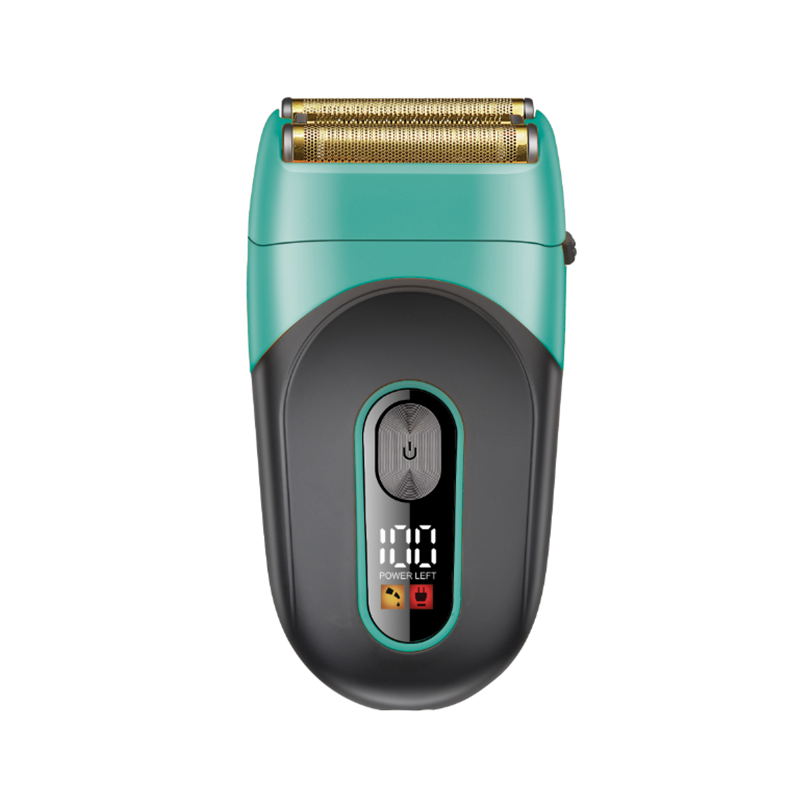
A man who shaves his head every other morning spends somewhere close to sixty hours a year holding a shaver against his scalp, and for most of that time he cannot see what he is doing. That single fact explains why the cordless head shaver has evolved along a different path from the face shaver. The design problem is not closeness on a flat cheek. It is coverage on a curved, moving, partly invisible surface that has to be finished with one hand while the other steadies the head.
So here is the conclusion before the reasoning. Blade architecture and sustained torque matter more than anything printed on the box. A head shaver with a well-sealed cutting head, a motor that holds its speed when you press, and a body you can grip securely behind the ear will outperform a unit with more cutters, a higher no-load rpm figure and a longer list of attachments. Battery capacity, ingress protection and blade material form the second tier of importance. Colour options, LED displays and travel pouches sit at the bottom, and none of them should influence a decision you will repeat three or four times a week for several years.
This article addresses two readers at once. The first is someone comparing cordless head shavers for personal use and wanting to know which specifications actually predict a good result. The second is a product manager, sourcing engineer or brand owner specifying a head shaver for OEM or ODM production, who needs to know which lines on a datasheet translate into user satisfaction and which are decoration. Both readers need the same underlying knowledge; only the depth of the test protocol differs.
Why a Head Shaver Is Not a Face Shaver Without a Handle
A scalp presents roughly 600 square centimetres of surface, and almost none of it is flat or easily observed. Hair on the crown typically grows in a whorl, so the direction of cut changes by ninety degrees or more within a few centimetres. Around the occipital bone and the base of the skull the surface turns away from the hand. Behind the ear the blade has to work at an angle where a foil head loses contact area and a rotary head loses pressure.
Three design consequences follow directly from that geometry.
- Coverage per stroke becomes the dominant comfort variable. A head with a larger effective cutting footprint finishes the crown in fewer passes, and fewer passes means less cumulative friction on the same patch of skin.
- The shaver must be predictable by feel alone. When you are working on the back of your head, you are steering by sound, vibration and resistance rather than by sight. A motor that changes pitch unpredictably or a head that snags without warning turns a routine shave into a series of small corrections.
- Edge definition matters more than on the face. The hairline above the ears and the neckline behind the skull need a clean boundary, and a bulky head cannot reach them without stretching the skin into awkward shapes.
There is also a time dimension. Most head shavers aim to finish in three to five minutes, which is a much shorter window than a face shave. That constraint pushes designs toward larger cutting surfaces and higher blade counts, and it is the reason the category looks the way it does: multiple heads clustered on a short body, or a wide foil presented at an angle.
A specification borrowed from face shaving often fails here. A foil tuned for the jaw can be excellent on the cheek and mediocre on the crown, because the crown curves along two axes at once while the jaw curves along roughly one. That is why reading a face-shaver review and applying it to a head shaver is an unreliable shortcut.
Rotary or Reciprocating: The Choice That Determines Everything Else
Two blade architectures dominate the category, and the choice between them sets the tone for every other decision, from motor selection to housing shape. Rotary heads use three to seven circular cutters that rotate against a slotted surface. Hair enters the slots and is sheared as the cutter ring passes. Reciprocating heads, usually described as foil shavers, drive a linear cutter back and forth beneath a thin perforated foil; hair passes through the holes and is cut against the foil edge.
| Behaviour | Rotary multi-head | Reciprocating foil |
|---|---|---|
| Contact on compound curves | Follows the skull well; each head articulates independently | Needs a flatter contact patch; best on the crown and sides |
| Closeness on a single pass | Good; usually needs a light second pass | Very good; the closest single-pass result of the two |
| Performance on three-day growth | Strong; slots accept longer hair without clogging | Weaker; long hair bridges the foil and forces repeated passes |
| Pressure required | Moderate; extra pressure mainly costs battery life | Low; excess pressure quickly produces razor burn |
| Noise character | Continuous whine, pitch rises with load | Higher-frequency buzz, often louder in absolute terms |
| Cleaning effort | Head usually lifts off; hair collects under each cutter | Foil and cutter separate; fine dust traps in the frame |
| Typical best-fit user | Shaves two to four times a week, wants speed and forgiveness | Shaves daily, prioritises a tight finish, tolerates slower work |
Neither architecture is universally better, and the marketing around both exaggerates. Rotary heads win on speed and on curved, awkward areas; foils win on closeness and on very short regrowth. A man who shaves every second day and has sensitive skin around the nape will usually be happier with a rotary head that needs less pressure. A man who shaves daily and wants a scalp that feels smooth against the grain will usually prefer a foil, provided he keeps the head flat against the skull rather than tilting it into the curve.
If you want a deeper side-by-side on the mechanics and the skin consequences of each, the detailed breakdown of rotary versus foil shaver designs covers the cutting geometry in more depth than is useful here.
Motor, Torque and Speed Droop: Reading Past the RPM Figure
Almost every cordless head shaver advertises a rotational speed, usually somewhere between 2,500 and 5,000 revolutions per minute. That number is measured with nothing touching the blades. It tells you very little about what happens when the head meets a week of dense hair and the user leans in slightly to get the crown finished.
The useful figure is speed droop under load: how much rotational speed the motor loses when resistance rises. A shaver that drops from 4,000 to 2,200 rpm under finger pressure will stall intermittently in thick hair, and every stall converts into a pull rather than a cut. A shaver that drops from 3,200 to 2,900 rpm feels calmer and cuts more consistently, even though its headline number is lower.
Three hardware choices determine that behaviour.
- Motor type. Brushed DC motors are cheap and adequate, but torque falls quickly as the battery voltage sags during a shave. Brushless motors cost more and hold speed far better across the discharge curve, which is why they appear in higher-tier units.
- Closed-loop control. A small control board that measures speed and raises current to compensate turns an ordinary motor into a constant-speed drive. The cost is a few cents of electronics and a measurable improvement in how the shaver behaves on the third pass.
- Gearing and cutter mass. A heavier cutter assembly carries momentum through brief load spikes but takes more energy to accelerate. Direct-drive heads with light cutters respond faster but feel busier in the hand.
You can test all of this without instruments. Charge the unit fully, let the hair grow for three days, and shave the back of the head first, where the hair is densest. If the pitch drops noticeably and stays down, the drive is struggling. If the pitch dips and recovers within a second, the control loop is doing its job.
Noise belongs in the same conversation. Motor noise is not purely cosmetic; a harsh, rising whine under load usually signals a drive working near its limit, and it makes the shave feel more aggressive than it is. For buyers who shave early in a shared house, or for brands targeting that customer, a deliberately quiet drive is a legitimate selling point rather than a marginal one.
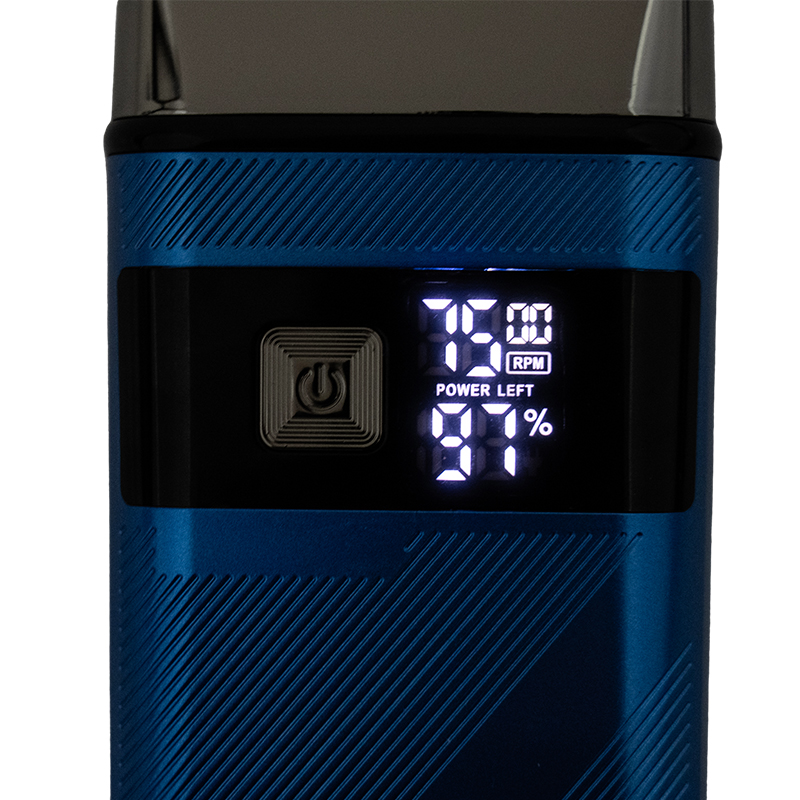 LT-858 Silent Low-Noise Reciprocating Foil ShaverA quiet reciprocating shaver with a flexible foil head, washable body and dry/wet use, suited to early-morning shaving in shared spaces.View Product →
Reciprocating designs built around a low-noise drive are worth examining closely here, because the linear cutter in a foil head generates less tonal variation than a rotating head and the perceived noise drops further when the motor itself is damped.
Blade Geometry, Foil Thickness and What Skin Safety Really Means
Skin safety in head shaving is mostly a story about pressure and clearance, not about blade sharpness. A cutter that is sharp but badly gapped will grab hair at the root and lift the skin into the slot; a cutter that is slightly less sharp but correctly preloaded will glide.
The relevant dimensions on a foil head are the foil thickness, the hole or slot width, and the gap between the moving cutter and the underside of the foil. Foils on quality heads are commonly in the 0.04 to 0.06 millimetre range. Thinner foil cuts closer because the hair is sheared lower, but it also deforms more under pressure and punctures more easily if the head is dropped. Slot width governs which hair lengths enter: narrow slots give a cleaner cut on short regrowth and reject longer hair, which is why a foil shaver used on a week of growth feels like it is doing nothing.
On rotary heads the equivalent variables are the number of cutter blades per ring, the spring preload that pushes each cutter against the slotted surface, and the diameter of the slot opening. A well-made rotary head has a small, consistent gap that you cannot see but can feel: run a fingernail across the surface and it should catch evenly at every slot, not at some and not at others.
Two practical points follow. First, more cutters reduce the number of passes but increase the total sliding friction per pass, so a seven-head rotary is not automatically gentler than a five-head unit; it depends on how much pressure the user applies. Second, cutter material matters for a minority of users. Nickel sensitivity is real, and a coated or stainless cutter assembly is a reasonable specification line for brands selling into markets where that concern is voiced.
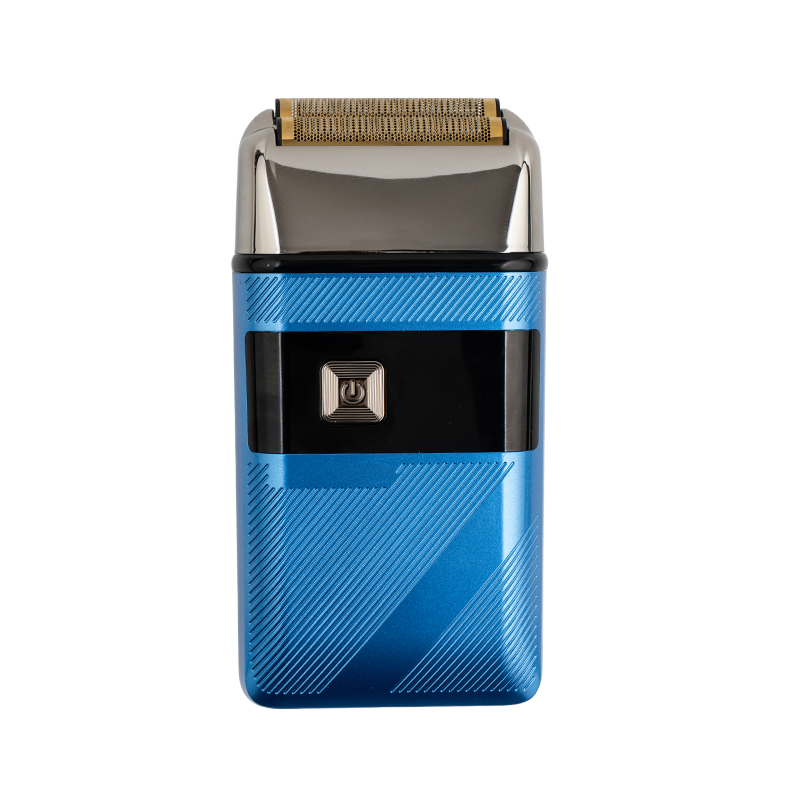
LT-863 Close-Fitting Skin-Safe Everyday Reciprocating ShaverA daily-use reciprocating shaver with a close-fitting etched blade head and USB charging, positioned for skin-safe shaving where pressure irritation is a concern.View Product →
A close-fitting, skin-safe reciprocating head intended for daily use is the configuration most often specified when the target user shaves every morning and reports irritation from pressure rather than from blade contact. The design priority there is a consistent foil preload that does not increase sharply when the user leans on the head.
Battery, Runtime and the Numbers Behind Them
Runtime claims on cordless head shavers usually range from 45 to 120 minutes, and the gap between the claim and the reality is wider than in almost any other specification. The reason is that runtime depends on load, and load depends on how the user shaves.
Battery capacity is quoted in milliamp-hours at 3.7 volts nominal. Converting to energy makes the arithmetic honest: a 600 mAh cell holds about 2.2 watt-hours, a 1,200 mAh cell about 4.4, and a 1,500 mAh cell about 5.6. A rotary head with five cutters draws roughly 1.5 to 3.5 watts depending on hair density and pressure, so a 1,200 mAh pack gives somewhere between 60 and 110 minutes of actual cutting. Marketing figures tend to be measured at the low end of that draw.
| Cell capacity | Energy at 3.7 V | Realistic runtime | Charge time at 5 V / 1 A | Typical weight contribution |
|---|---|---|---|---|
| 600 mAh | 2.2 Wh | 35–55 minutes | 60–90 minutes | 12–14 g |
| 1,200 mAh | 4.4 Wh | 65–105 minutes | 90–120 minutes | 22–26 g |
| 1,500 mAh | 5.6 Wh | 85–130 minutes | 120–150 minutes | 28–32 g |
Translated into use, a 1,200 mAh head shaver covers roughly twelve to eighteen sessions at four minutes each. That is two to three weeks of every-other-day shaving, which is the practical threshold most users care about. Anything past a month per charge is a convenience, not a necessity.
Quick charge, USB-C and the charging habits that shorten life
A five-minute top-up that delivers one full shave is the single most useful charging feature in this category, because it removes the failure mode that ruins mornings: a flat battery and no time to wait. It requires a control board that can push a higher current into the cell for a short window without exceeding the cell's rating, which is a real engineering cost rather than a label.
Cell ageing is the specification nobody prints. A lithium-ion pack typically retains about 80 percent of its original capacity after 300 to 500 full cycles. At three shaves a week with a fortnightly charge, that is three to five years of service before runtime becomes noticeably shorter. Sealed batteries mean the whole unit is replaced at that point; a screwed-in, replaceable cell extends product life and is worth specifying if repairability is part of your brand position.
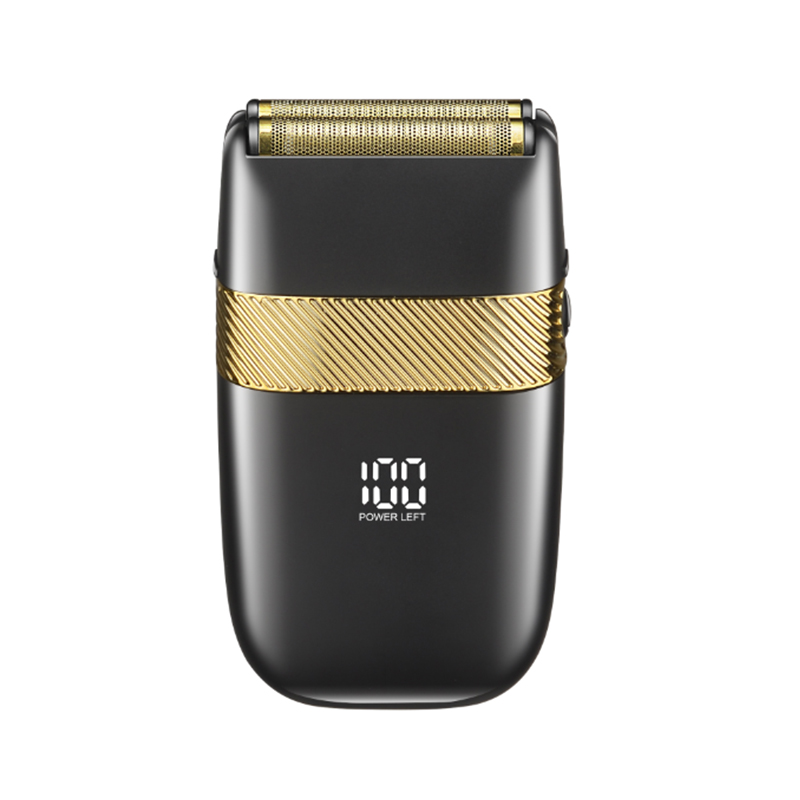 LT-865 Premium Gentleman Quick-Charge Reciprocating ShaverA quick-charge reciprocating shaver with USB charging and a 14500 battery, relevant when runtime, cell documentation and first-shipment compliance are being assessed.View Product →
Quick-charge capability also carries a compliance dimension that catches new buyers out. Lithium cells shipped by air need a UN38.3 test summary and correctly classified packaging, and the documentation has to match the cell actually installed. A supplier who cannot produce that paperwork for the exact model being ordered will delay your first shipment.
Sealing and Cleaning: What an IP Rating Actually Promises
Ingress protection ratings are widely misunderstood. IPX4 means protection against splashing water from any direction. IPX5 means protection against a directed jet at 6.3 millimetres nozzle diameter. IPX6 is a more powerful jet. IPX7 means immersion at one metre for thirty minutes. None of these ratings cover soap, shaving gel, oil or repeated thermal cycling, and none of them are permanent: a seal that passes on day one can fail after two years of being opened and rinsed.
On a head shaver, water enters through four routes, and only one of them is usually the problem.
- The cutting head itself, which is designed to be rinsed and is not sealed at all.
- The shaft seal between the motor and the head coupling, which wears with use.
- The switch membrane, which fails when the adhesive degrades.
- The charging port cover, which is by far the most common source of water damage because it is opened weekly and closed carelessly.
If the shaver is going to be used in the shower, IPX7 with a tethered or hinged port cover is the sensible minimum, and the cover should be a moulded silicone plug rather than a friction-fit flap. If it will only be rinsed under a tap, IPX5 is sufficient and the extra sealing on an IPX7 unit mostly adds cost.
Cleaning discipline affects cutting performance more than most users expect. Hair, skin flakes and sebum accumulate between the cutter and the foil or under the rotary cutters, and the resulting drag makes a perfectly serviceable head feel blunt. Rinse the head under warm water after every use, shake it out, and leave the head open to dry. Once a month, apply a drop of light mineral oil to the cutter assembly. Do not use household lubricants, and do not store the unit with the head clamped shut while damp.
Grip, Weight and the Geometry of Reaching the Back of Your Head
Head shavers come in two body types, and the difference is functional rather than aesthetic. Palm-style units sit in the hand like a soap bar, with the cutting surface facing the palm; handle-style units are held like a face shaver. Palm designs give better control on the crown and the sides because the wrist stays neutral, but they are harder to use around the ears and the neckline. Handle designs reach those edges more easily but require more wrist rotation at the back of the skull.
Weight is a specification worth taking seriously. Most cordless head shavers fall between 150 and 350 grams. Below 180 grams the unit feels insubstantial and users unconsciously press harder to compensate; above 300 grams the arm tires during a five-minute session held above shoulder height. A figure around 220 to 260 grams with the centre of gravity close to the cutting head is the sweet spot for most hands.
Three details separate a well-resolved body from a generic one. The grip surface should remain secure when wet, which means a moulded texture or a rubberised panel rather than a gloss finish. The power button should be reachable and operable with the thumb of the holding hand, because the other hand is busy steadying the head. And there should be a travel lock, since a shaver that starts itself inside a wash bag is a warranty claim waiting to happen.
Reach matters too. A palm-style body of 75 to 85 millimetres diameter fits most adult hands comfortably; a handle-style body of 120 to 140 millimetres length gives enough leverage to reach the nape without the fingers cramping. These are small numbers, but they determine whether the shave takes four minutes or seven.
Wet or Dry, and What Skin Preparation Changes
Dry shaving is faster and, on a clean scalp, perfectly comfortable with a well-designed head. Wet shaving with gel or foam reduces friction noticeably and is generally kinder to skin that reddens easily, but it demands a unit rated for wet use and it demands a rinse afterwards, because dried lather stiffens the cutter assembly.
The preparation that matters most costs nothing. Two to three minutes of warm water softens the hair by roughly a third of its dry tensile strength, and softer hair cuts with less torque and less pull. A shave cream applied against the grain lifts the hair slightly. A cold rinse and an alcohol-free balm afterwards calm the skin.
The most common skin complaint in head shaving is not razor burn in the ordinary sense but folliculitis and ingrown hairs along the nape and the crown whorl, where hair grows almost parallel to the skin and a close cut leaves a sharpened tip that curls back. The fix is technique rather than equipment: fewer passes, lighter pressure, and a routine that includes a mild exfoliant once or twice a week. If you already know your skin reacts badly, the guidance on choosing a shaver for a bald head covers the specific case in more detail.
Shaving frequency interacts with all of this. Daily shaving with a foil is fine for resilient skin and punishing for reactive skin; every-other-day shaving with a rotary head is the more forgiving default. There is no configuration that suits everyone, which is why the same factory will build three or four head variants around the same motor platform.
Reading a Specification Sheet: Tolerances Worth Writing Into a Purchase Order
A datasheet full of adjectives is not a specification. The following lines are the ones that translate into measurable user experience, together with the tolerance that makes them enforceable. These are written for a buyer or product manager placing an order, but they are equally useful to an individual checking whether a product page says anything substantive.
- Runtime: at least 60 minutes from full charge, measured at 25 degrees Celsius on a new cell, with a minus-10-percent tolerance. Anything stated without a load condition is a marketing number.
- Speed droop: no more than 15 percent loss at a 2-newton contact load, measured at the cutting head.
- Charge time: 120 minutes or less from empty, with a five-minute quick charge delivering at least three minutes of runtime.
- Acoustic noise: 65 dB(A) or lower measured at 30 centimetres in free air, at nominal speed.
- Ingress protection: IPX7 verified after 30 minutes at one metre, tested on production samples rather than prototypes.
- Drop resistance: six faces onto a tiled concrete surface from one metre, with no functional failure and no cracking of the foil or head housing.
- Motor life: 200 hours of cumulative operation, equivalent to roughly five years at eight minutes a day.
- Blade life: cutting performance within 10 percent of new after 12 months of simulated use at three shaves per week.
- Battery retention: at least 80 percent of rated capacity after 300 charge cycles.
None of these are exotic. They are standard engineering parameters that a competent factory already measures internally. The point of putting them in writing is that it moves the conversation from appearance to performance, and it gives both sides a shared definition of a defect.
Where the Cost Goes, and Where Cheapening Shows Up
A cordless head shaver contains perhaps sixty components across six cost centres. Understanding where the money sits explains why two units that look identical in a photograph behave completely differently in the hand.
- Motor and drive electronics: 15 to 25 percent of bill of materials. Brushless motors and constant-speed boards sit at the top of that range.
- Blade assembly: 15 to 25 percent. Foil thickness tolerance, cutter count and coating are the variables.
- Battery and charging circuit: 10 to 20 percent. Cell capacity, protection board and quick-charge capability.
- Housing and tooling: amortised over volume, so a low-volume order carries a heavy per-unit penalty.
- Sealing: 3 to 6 percent. Cheap here and the product fails in month eight.
- Packaging and accessories: highly variable, and the easiest place to add perceived value without improving the shave.
Cheapening is rarely visible on the outside. It shows up as a foil reduced from 0.05 to 0.08 millimetres, which cuts less closely and deforms more; as a single-speed motor with the control board removed, which is why the shaver bogs down in dense hair; as a 600 mAh cell replacing a 1,200 mAh one, halving runtime while keeping the same shell; as a port cover without a silicone gasket; as a switch membrane with thinner adhesive; and as an ABS housing substituted for a PC/ABS blend, which feels fine until it is dropped on a tiled bathroom floor.
The practical lesson for a buyer is to compare like with like at the same price point and to demand the specification lines from the previous section regardless of what the product costs. At retail, the difference between a 30-dollar head shaver and a 120-dollar one is rarely features. It is the drive, the blade tolerance and the seal.
Sourcing Wireless Head Shavers: What to Ask an OEM or ODM Partner
For a brand, importer or distributor, the sourcing question is not simply who can build a head shaver, but who can hold a specification stable across repeat orders. That means asking about process control, not just samples.
A manufacturer operating in the personal care appliance segment, such as Yuyao Laituo Electrical Appliance Co., Ltd. in Zhejiang, typically works across several tool families at once, in this case hair clippers, electric shavers, body groomers and nose trimmers. The shaver family is usually built around reciprocating heads, with floating cutter mounts and power regulation circuitry described as balancing cutting efficiency against skin comfort. That combination, a floating head plus load-responsive power, is precisely the pairing that determines performance on a curved scalp, so it is worth verifying rather than assuming.
Five questions separate a supplier who can deliver a product from one who can deliver a programme.
- Who owns the tooling, and what happens to it if the relationship ends? Get this in writing before the first mould is cut.
- Which certifications are held by the factory and which by the product? CE and RoHS are commonly declared for personal care appliances, but the declaration must name the exact model and the exact cell.
- Can the factory supply a UN38.3 test summary for the installed battery, plus a test report for the ingress protection claim on production samples?
- What is the realistic lead time from design freeze to first production, including tooling, trial runs and packaging approval?
- What is the minimum order quantity per colourway, and how does it change if the housing texture changes?
Two further checks are worth the effort. First, ask for blade life data after simulated use rather than a nominal figure; a head that cuts well when new and poorly after six months generates returns, and returns are the most expensive part of a low-margin product. Second, run a user trial of at least fifty units across users with different hair density, skin sensitivity and shaving frequency. Head shaving is a high-touch activity, and the failure modes that matter, pressure discomfort, snagging at the nape, difficulty reaching the crown, appear only in sustained use.
Finally, consider the variant strategy early. A single motor platform can support a palm-style body, a handle body, two blade counts and three battery options, which gives a brand a coherent range without three separate development programmes. That approach is only efficient if the specification lines are defined once and applied across the family.
A Seven-Day Evaluation Protocol for a Sample
Whether you are evaluating a single purchase or a hundred-unit sample batch, a structured week tells you more than any spec sheet. The sequence below assumes the user shaves the head every second day.
- Day one: charge fully and record the time to full charge. Shave dry on two days of growth. Note where the head snags and whether the motor pitch drops and recovers or drops and stays down.
- Day two: shave wet with gel. Check that the head remains controllable when wet and that the grip does not rotate in the hand.
- Day three: skip the shave, then shave three days of growth. This is the hardest test for a foil head and the most revealing for a rotary one.
- Day four: time the shave, and time a second pass over the crown only. A large difference between the two indicates poor coverage per stroke.
- Day five: disassemble and clean. Look for hair trapped between the cutter and the foil, and check whether the port cover reseats positively.
- Day six: drop the unit from waist height onto a tiled floor, then repeat the shave. Listen for a change in pitch that would indicate a bent shaft.
- Day seven: run the battery from full to empty and compare the actual runtime against the claim. Record it, because this is the number that will annoy the user first.
Keep notes on comfort rather than closeness alone. Closeness can be judged by running a hand against the grain; comfort is judged by whether you want to repeat the exercise tomorrow. Products that fail in the field usually fail on the second measure.
Failure Modes, Warranty and the Parts That Actually Wear
Head shavers fail in predictable ways, and knowing the list helps both buyers and brands set realistic warranty terms.
- The charging port cover seal, which hardens and stops sealing within one to two years of weekly use.
- The battery, which loses capacity gradually before failing suddenly; runtime halves before the unit refuses to start.
- The cutter and foil, which wear against each other continuously. Expect twelve to eighteen months of regular use before cutting performance drops noticeably.
- The foil itself, which can develop micro-cracks after a drop and then tear during a shave.
- The switch membrane, particularly on units rinsed under a running tap.
- The head release latch, which is a small moulded feature under constant spring load.
A twelve-month warranty covering motor and electronics is standard. A twenty-four-month term is a genuine differentiator but only sustainable if the seal and the port cover are specified to match. Excluding the cutter and foil from warranty coverage is normal practice, provided replacement heads are available at a sensible price, because a shaver without spare heads becomes disposable at the eighteen-month mark.
Spare part availability is the single most overlooked line in a purchasing agreement. It costs almost nothing to specify that replacement heads remain available for five years from the date of the last production run. It costs a great deal to discover, two years in, that the tooling has been retired.
The Decision, Restated
A wireless head shaver is a tool for a curved, partly invisible, frequently repeated task, and it should be judged on how it behaves under load on the back of the skull rather than on how it looks in a photograph. Blade architecture comes first: rotary heads for speed and forgiveness on compound curves, reciprocating foils for closeness on daily regrowth. Sustained torque comes second, because a drive that holds its speed is the difference between cutting and pulling. Sealing comes third, because the port cover, not the blade, is what ends most products' working lives. Battery capacity, grip geometry and cleaning access follow in that order.
Everything else, the cutter count printed in large type, the LED ring, the pouch, the travel lock icon, is either a small convenience or a distraction. The specification lines that matter are unglamorous and measurable: runtime at a stated load, speed droop at two newtons, noise at thirty centimetres, ingress protection verified on production samples, and blade life after simulated use. Ask for them, test them, and the product will do the job for years rather than months.
+86-574-62151741
+86-13655842900
laituo@google.com
No. 22 Liufang Road, Yuyao Industrial Park, Ningbo City, China
Copyright © Yuyao Laituo Electric Appliance Co., Ltd. All Rights Reserved
OEM/ODM Hair Removal Tool Epilator Manufacturers
