
 русский
 Français
 Español
 Deutsch
 عربى

Personal Nose Hair Trimmer Buying Guide for OEM Sourcing Teams and Brands
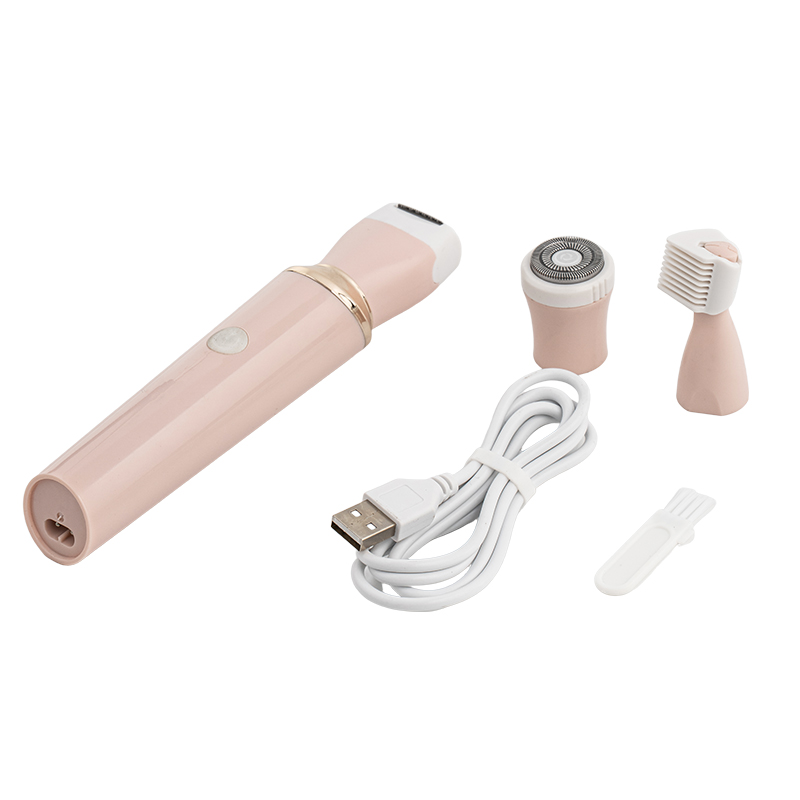
A buyer opens a sample box, checks the finish, presses the button, and runs the personal nose hair trimmer against a tissue. It sounds fine. Two days later, the first user complaint arrives: the unit pulls hair near the nostril wall, the cap feels loose, and the motor slows when the blade meets thicker growth. The sample looked acceptable, but the specification was never written around the actual job. That is the gap this guide addresses.
For an OEM or ODM program, a personal nose hair trimmer is not a miniature hair clipper. It is a small safety instrument that combines a guarded cutting system, a low-vibration motor, a battery, a skin-contact housing, and a cleaning interface. The purchase decision should be based on cut geometry, motor behavior under load, sealing, hygiene, documentation, and production consistency. The right starting point is a clear product brief, not a catalog photo.
Why a Personal Nose Hair Trimmer Is a Safety Product First
The practical conclusion is simple: buyers should specify a personal nose hair trimmer around three outcomes—no pulling, no sharp edge contact with the nasal wall, and no hidden hygiene trap. Features such as a light, a travel cap, or a gift box matter, but they cannot compensate for poor tip geometry or a motor that stalls under light load. A trimmer that cuts quickly but feels unsafe will generate returns, while a trimmer that feels controlled but cannot cut thick hair will generate poor reviews.
The nose is a sensitive area with curved surfaces, uneven hair direction, and limited visibility. Users cannot see the blade tip while trimming, so the product must be forgiving by design. That means the outer guard should guide hair into the cutting zone while keeping sharp edges away from skin. The inner blade should shear cleanly rather than tug. The motor should recover quickly when load increases. The housing should be easy to clean without trapping clippings in a crevice that the user cannot reach.
The Three Failure Modes That Matter Most
Most field complaints fall into three groups. Addressing them early is cheaper than correcting them after tooling is complete.
- Pulling and tugging: usually caused by blunt edges, insufficient torque, poor blade alignment, or a guard that feeds too much hair into the cutting zone at once.
- Skin irritation or nicking: usually caused by a sharp outer edge, excessive tip exposure, a bent guard, or a user pressing too hard because the motor feels weak.
- Hygiene and reliability complaints: usually caused by poor sealing, a removable head that is difficult to refit, battery drain, or clippings that collect around the motor shaft.
What Buyers Should Put in the Brief
A useful brief should define the user, the hair type, the expected trimming frequency, the cleaning method, the retail market, and the price architecture. “Men’s nose trimmer” is not a specification. “A rechargeable personal nose hair trimmer for daily use by men aged 35–65, with a washable head, USB-C charging, a quiet motor, and retail packaging for the EU market” is a specification. The second version gives the factory enough information to choose a motor, a blade set, a seal strategy, and a test plan.
| Requirement | Why it matters | Practical starting point |
|---|---|---|
| Tip and guard clearance | Controls the distance between sharp edges and the nasal wall. | Define the guard opening and tip exposure with a drawing and a pin-gauge check; inspect every production lot. |
| Blade material and edge quality | Affects cutting feel, corrosion resistance, and product life. | Specify stainless steel grade, hardness range, edge geometry, and a cut-test method with defined hair samples. |
| Motor speed and torque | Determines whether the unit cuts cleanly or stalls in thick hair. | Record no-load speed, loaded speed, current draw, and recovery time; set a maximum acceptable speed drop for your own load test. |
| Battery and charging | Affects runtime, standby loss, travel safety, and user trust. | Define cell type, capacity tolerance, charging current, runtime under a repeated-use cycle, and over-discharge protection. |
| Sealing and cleaning | Affects hygiene, odor, and long-term reliability. | State the IP target, the washable parts, the drying method, and the test sequence for water exposure and refitting. |
| Noise and vibration | Affects perceived quality and comfort near the face. | Measure sound pressure at a fixed distance and test vibration at the housing; set limits before tooling approval. |
| Surface temperature | Affects comfort during longer sessions and motor life. | Run a defined continuous-use cycle and record temperature rise at the housing and blade area. |
| Claims and documents | Affects market access, retail acceptance, and liability exposure. | Match every claim—washable, waterproof, rechargeable, runtime—to a test report or controlled internal specification. |
The table is not a substitute for a product specification, but it is a useful negotiation tool. If a supplier cannot explain how each item will be measured, the sample evaluation will drift into subjective impressions. A factory that already has a measurement method for blade pull force, motor speed drop, and seal performance is easier to audit and easier to scale.
Rotary, Linear, and Manual: Choosing the Cutting System
There is no universal “best” cutting system for a personal nose hair trimmer. The right choice depends on the hair type, the price position, the cleaning routine, and the user’s tolerance for noise and vibration. Rotary systems are common in consumer products because they are compact and relatively forgiving. Linear or reciprocating systems can offer a precise shearing action, but the mechanism and alignment tolerances are less forgiving in production. Manual scissors or trimmer combs are simple and inexpensive, but they depend heavily on user skill and are less suitable for mass-market self-use.
Rotary Cutting Systems
A rotary personal nose hair trimmer uses a rotating inner blade behind a fixed guard. Hair enters the guard openings and is sheared between the rotating and fixed surfaces. The design can be compact, and the rounded guard is relatively easy to make skin-friendly. The trade-off is that the blade must maintain contact pressure and alignment over time. If the inner blade wears unevenly or the shaft collects clippings, the cutting feel changes. Buyers should ask for a blade-runout specification and a cleaning method that does not require the user to bend the cutting assembly.
Linear or Reciprocating Cutting Systems
A linear system moves a blade side to side or back and forth. It can produce a clean shearing action with less rotational vibration, and it can be designed with a narrow tip for precision work. The challenge is mechanical: the drive mechanism, spring pressure, and blade guidance must remain stable after drops and cleaning cycles. A linear personal nose hair trimmer often feels more precise, but it can also be less tolerant of misalignment during assembly. Production fixtures and blade-mating checks matter more than the concept drawing.
Manual Options and Hybrid Formats
Manual scissors and comb-style trimmers still have a place in travel kits and low-cost promotional sets, but they are not a direct substitute for a powered personal nose hair trimmer. Hybrid products that combine a nose trimmer with an ear trimmer, detail trimmer, or eyebrow trimmer can reduce SKU count and increase perceived value. The risk is that the shared motor and battery are optimized for one head and merely tolerated by another. If you choose a multifunctional format, test every head under its own load profile.
| Cutting system | Strength | Trade-off | Typical use |
|---|---|---|---|
| Rotary | Compact, rounded guard, familiar user experience. | Blade alignment and cleaning are critical; torque feel can vary. | Daily consumer trimmer, travel kit, entry to mid-tier retail. |
| Linear or reciprocating | Precise shearing action, narrow tip potential, controlled vibration. | More sensitive to assembly alignment, wear, and drop damage. | Premium grooming set, precision-focused product, gift segment. |
| Manual or hybrid | Low cost, simple mechanism, easy travel storage. | Depends on user skill; powered performance is limited. | Promotional item, travel accessory, secondary SKU. |
For a men’s grooming assortment, a multifunctional format can reduce SKU count while covering nose, ear, and detail trimming. The platform can be specified with different guide combs, blade heads, and packaging without changing the core motor. That approach works only when the nose head is treated as a primary use case, not as an afterthought.
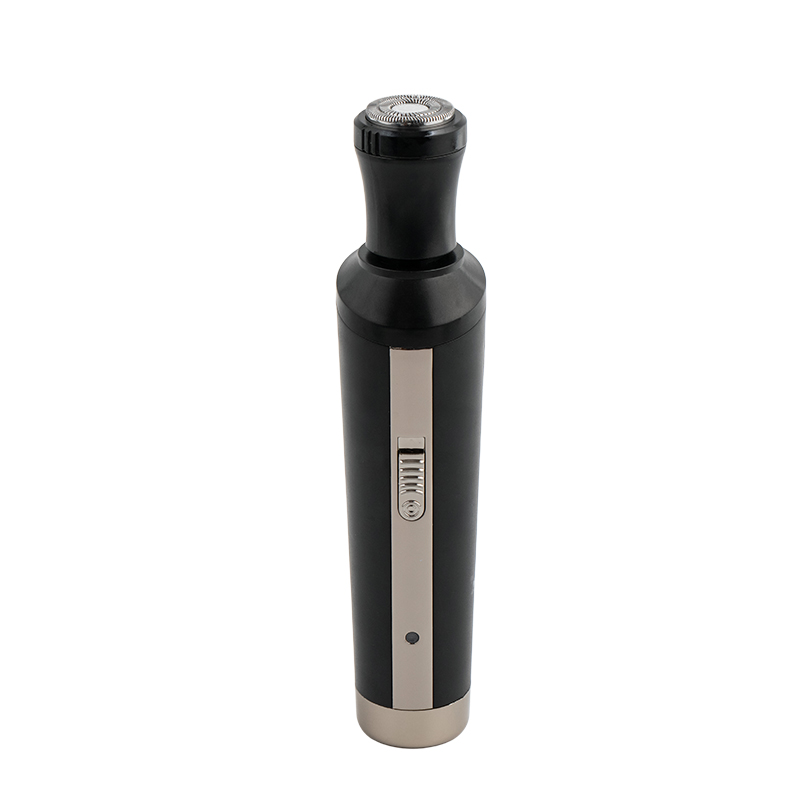
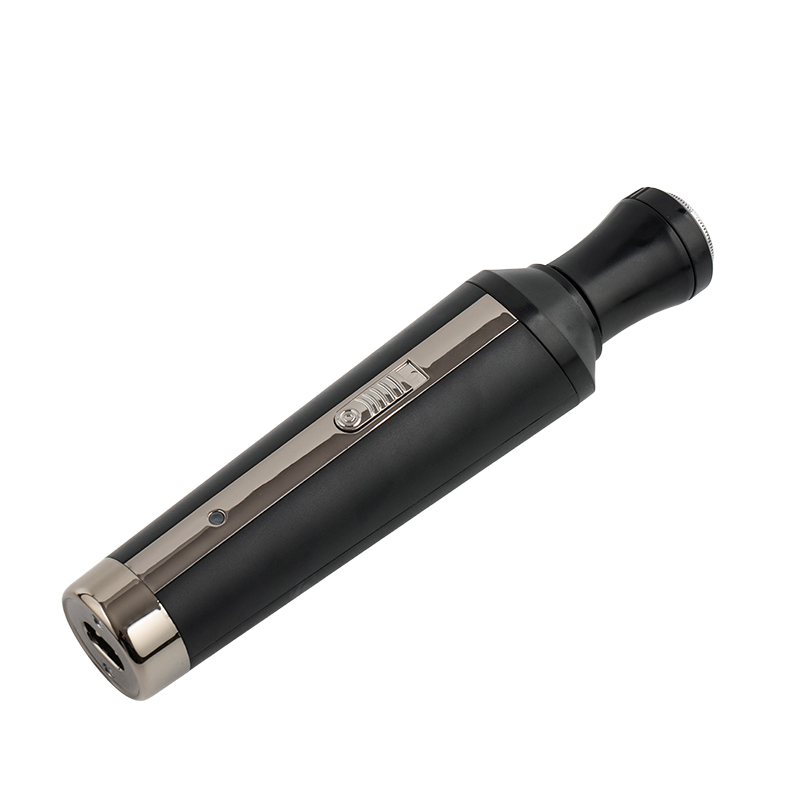 LT-616M 4-in-1 Men's Grooming TrimmerA compact four-in-one trimmer combining shaver, nose, sideburn, and precision heads, suited to grooming assortments where nose trimming remains a primary use.View Product →
A multifunctional trimmer should still be evaluated as a nose trimmer first. Run the nose-head test with thick and thin hair samples, check the guard temperature after repeated use, and confirm that the cleaning routine does not require removing a tiny retaining ring that users can lose. If the nose function is weak, the extra heads will not protect the product rating.
Blade Geometry and Tip Safety
The blade set is the heart of the product, but “stainless steel blade” is not enough as a purchase specification. Buyers need to define the steel grade, hardness, edge angle, surface finish, guard opening, tip radius, and the fit between the inner and outer blade. A sharp edge that is not properly guarded is a safety problem. A guard that is too closed will not feed hair efficiently. A blade pair that is too loose will pull; too tight and the motor loses speed or the blade heats up.
Inner Blade, Outer Blade, and Contact Pressure
The inner blade does the cutting, while the outer guard controls hair entry and skin distance. Contact pressure between the two surfaces affects cutting quality and wear. If pressure is too low, hair can slip between the blades and pull. If pressure is too high, friction increases motor load and surface temperature. A production specification should include a spring-force or interference target, a blade-flatness check, and a run-in procedure. The factory should also define how the blade pair is matched, because mixing parts from different cavities can change the cutting feel.
Guard Opening and Tip Radius
The guard opening determines how much hair enters the cutting zone per pass. A larger opening can improve efficiency on thick hair, but it also increases the chance of pulling if torque is limited. A smaller opening feels safer but may require more passes, which can irritate the skin. The tip radius should be controlled with a drawing and a visual or optical check. Buyers should ask for first-article inspection reports on the guard, not only on the finished product. A small mold-flow change can alter the edge radius without changing the external dimensions.
For buyers comparing cut geometry, a precision blade nose trimmer is a useful reference point because it shows how guard design, blade alignment, and tip access interact. The lesson is not to copy a shape; it is to specify the functional result. Define how the blade should cut a standardized hair sample, how much force the user should feel, and how the unit should behave when the guard is pressed lightly against a curved surface.
Coating, Corrosion, and Cleaning
Coatings can improve lubricity or appearance, but they can also wear unevenly and change the cutting feel. If a coating is used, ask for adhesion and wear tests that reflect the cleaning method. A personal nose hair trimmer is exposed to moisture, skin oils, and cleaning water. Stainless steel is common, but the grade and passivation matter. A low-cost steel with a decorative coating may pass an initial cosmetic inspection and still corrode at the blade edge after repeated washing. Salt-spray testing alone is not enough; a cyclic wash-and-dry test is closer to real use.
Motor, Torque, and Noise
A personal nose hair trimmer does not need high top speed as much as it needs stable torque at the blade. The motor must recover quickly when hair load increases, without stalling or dropping into a weak, buzzing state. Buyers should ask for a motor specification that includes no-load speed, rated voltage, current draw, stall current, and the speed drop under a defined load. The last item is often missing, yet it is the one that predicts the user experience.
Speed Versus Torque
A high no-load speed can look impressive on a spec sheet, but it may not cut better. If the blade geometry is inefficient, the motor will slow down as soon as it meets resistance. A lower-speed motor with better torque and a well-matched blade can feel smoother and cut more cleanly. During sample evaluation, test the unit on hair samples of different thicknesses and directions. Listen for changes in pitch and check whether the blade recovers after the load is removed. A trimmer that hesitates at the first pass encourages the user to press harder, which increases skin risk.
Noise and Vibration
Noise is a quality signal near the face. A personal nose hair trimmer should sound stable, not rattling or strained. Measure sound pressure at a fixed distance, such as 30 cm, in a defined environment. Do not rely on a phone app for approval; use a calibrated meter or a consistent comparative method. Vibration at the housing is equally important. A unit can be numerically quiet but transmit a high-frequency buzz that feels unpleasant. Check the motor mount, the blade coupling, and the housing wall thickness. Adding a soft mount can reduce vibration, but it must not allow the blade shaft to misalign.
Thermal Behavior
Nose trimmers are often used for short sessions, but users may run them repeatedly. Define a continuous-use cycle that is longer than normal use, then measure temperature rise at the guard, housing, and battery area. If the blade area becomes uncomfortable, the motor or blade friction needs attention. Thermal behavior is also a reliability indicator: a unit that runs hot may have excessive friction, poor bearing alignment, or a battery discharging under load.
Power, Charging, and Battery Safety
The power architecture should match the retail position and the market’s expectations. Disposable batteries are simple and low cost, but they add user maintenance and can leak if the product sits in storage. Rechargeable lithium-ion or nickel-metal hydride designs offer convenience, but they bring charging, transport, and end-of-life considerations. USB-C charging is increasingly expected in mid-tier and premium products, but the connector, charging current, and protection circuit must be specified together.
Runtime and Standby Loss
Runtime claims should be based on a defined cycle, not a single continuous discharge. A realistic test might run the trimmer for 30 seconds, pause, and repeat until the battery reaches the cutoff voltage. That pattern reflects actual use. Standby loss matters as well, especially for products that sit in a bathroom drawer for weeks. Ask for quiescent current and a shelf-life test. A personal nose hair trimmer that is dead when the user needs it will be judged as unreliable even if the blade is excellent.
Charging and Protection
The charging circuit should include overcharge, over-discharge, overcurrent, and short-circuit protection. The connector should survive repeated insertion and removal. If the product uses a sealed body and a USB port, the port area needs a sealing strategy that survives cleaning. Buyers should request the battery test summary, cell specification, and transport documents. For international shipping, lithium batteries may require UN 38.3 test summaries and properly prepared documentation. Do not accept a generic certificate that does not match the cell and pack used in production.
Waterproofing, Cleaning, and Hygiene
“Washable head” and “waterproof body” are different claims. A washable head means the cutting assembly can be rinsed after removal. A waterproof body means the entire unit can be exposed to water without ingress that affects safety or function. Buyers should define the IP rating and the exact cleaning scenario. If the instruction manual says “rinse the head under running water,” the product must survive that action repeatedly, not just once in a laboratory demonstration.
Sealing Strategy
Ingress protection depends on the seam design, gasket material, button seal, charging port cover, and blade-shaft seal. A common failure is a well-sealed main housing with an unprotected button or port. Another is a gasket that swells or compresses permanently after exposure to cleaning agents. Specify the gasket material and compression range, and test after repeated washing and drying. If the product is not intended for immersion, state that clearly. Overstating water resistance creates returns and potential safety issues.
Cleaning Access and User Behavior
Users rarely clean a personal nose hair trimmer exactly as the manual describes. They may blow into the head, tap it against a sink, or rinse the whole unit. The design should make the correct cleaning method the easiest one. A removable head with a clear alignment mark is better than a friction-fit part that can be forced on incorrectly. A small brush should reach the blade area without bending the guard. If clippings collect behind the blade, the user may try to disassemble the head and damage the alignment.
For travel-oriented products, a compact nose hair trimmer can be a strong retail item, but compactness often reduces the space available for seals and battery capacity. Test the cap fit, the port cover, and the blade guard after repeated opening and closing. A travel cap that falls off in a bag exposes the blade and creates a poor unboxing experience.
Materials, Skin Contact, and Surface Finish
The materials that touch the skin should be selected for tolerance, corrosion resistance, and cleanability. Stainless steel is common for blades and guards. ABS, PC, and TPE are common for housings and grips. The choice should be based on the cleaning method and the retail market’s material restrictions. A soft-touch coating can improve grip, but it can also peel or become sticky after contact with skin oils. A glossy housing looks premium in a box but shows scratches and clippings.
Nickel Release and Skin Sensitivity
Skin-contact metal parts deserve a material declaration. Nickel release is a consideration in some markets, especially for items worn or held against the skin. If the guard or blade housing contains nickel, ask for test evidence or choose a material strategy that avoids the issue. This is not a reason to avoid all metal parts; it is a reason to know what is in the product and to document it. The same applies to adhesives, paints, and lubricants used near the blade.
Finish and Perception
Surface finish affects perceived quality more than many buyers expect. A parting line on the guard, a sharp seam on the button, or a loose battery door can make a technically sound trimmer feel cheap. Define the visible surface requirements and inspect first articles under the same lighting as the retail environment. If the product will be photographed for e-commerce, ask for a pre-production sample with the final texture and color. A last-minute change from matte to gloss can alter the entire visual position.
Compliance and Documentation for Target Markets
Compliance should be planned before the tooling is cut, not after the first shipment is ready. The exact requirements depend on the market, the product construction, the battery chemistry, and the claims made in the manual and packaging. For the European Union, a personal nose hair trimmer typically requires a CE marking strategy that covers applicable directives, a RoHS declaration, and technical documentation. REACH and WEEE obligations may also apply depending on the product and the importer’s role. For battery-powered products, transport and battery safety documents are part of the package.
Do not treat a CE certificate as a complete market-access file. The technical file should connect the certificate to the actual model, the bill of materials, the circuit diagram, the label, and the instruction manual. If the product changes motor, battery, or charging circuit, the file should be reviewed. A common sourcing error is to accept a certificate for a similar model and assume it covers the new one. The model designation, ratings, and construction must match.
| Document or test | What it supports | Buyer check |
|---|---|---|
| CE technical file | Applicable EU directives and conformity assessment. | Confirm model, ratings, BOM, labels, and manual are consistent. |
| RoHS report | Restricted substance control for electrical and electronic parts. | Check the report covers the actual materials and suppliers used. |
| REACH declaration | Substance obligations for the target market. | Review the scope with the importer; do not rely on a generic statement. |
| Battery test summary | Cell and pack safety, charging behavior, and transport readiness. | Match the cell model, pack design, and protection circuit to production. |
| UN 38.3 summary | Lithium battery transport testing where applicable. | Confirm the test covers the packed configuration and shipping state. |
| IP or washability report | Supports cleaning and water-resistance claims. | Confirm the test matches the user instruction, not a different condition. |
| Drop and transport test | Retail and e-commerce durability. | Check the test package, drop height, and sample size against your channel. |
This table is a planning aid, not legal advice. The importer and the destination market determine the final obligations. The important sourcing point is traceability: every claim on the box should have a document, a test, or a controlled internal specification behind it. If the factory cannot produce the link, the claim is a risk.
Reliability and Quality Control Tests
A personal nose hair trimmer should be tested as a system, not as a collection of parts. The blade, motor, battery, seal, and housing interact. A drop that cracks the housing may also misalign the blade. A wash cycle that enters the button may corrode the circuit over time. A charging test that passes at room temperature may fail in a warm bathroom. The quality plan should include incoming inspection, in-process checks, final inspection, and a reliability test plan that reflects the product’s use.
Incoming and In-Process Checks
Blade flatness, guard opening, motor speed, current draw, battery voltage, and housing dimensions should be checked at defined intervals. The blade pair should be matched and run-in according to a controlled procedure. If the factory only tests the finished unit by ear, it will miss early signs of misalignment. A simple functional test station with a defined load, a timer, and a pass/fail threshold is more useful than a subjective “feels smooth” judgment.
Lifecycle and Abuse Tests
Set test cycles that are longer than the expected user life. A repeated on/off cycle, a blade-load cycle, a charging cycle, and a cleaning cycle should be defined separately. Drop the product from retail-relevant heights onto a hard surface and inspect blade alignment, cap fit, and switch function. Test the battery after repeated charging and confirm runtime does not fall below the declared minimum. Run a temperature-rise test at the highest expected ambient temperature. For products with a travel cap, test the cap retention after repeated opening and closing.
Traceability and Corrective Action
Ask how the factory records blade lot, motor lot, battery lot, and assembly date. If a field issue appears, can the factory trace the affected units within a reasonable time? A supplier that can show lot control, test records, and a corrective-action process is easier to work with than one that relies on final inspection alone. The goal is not zero defects; the goal is early detection and controlled containment.
Target Users and Product Positioning
A personal nose hair trimmer can be positioned for daily grooming, travel, gifting, senior care, or a multifunctional grooming kit. Each position changes the feature priority. A daily-use product needs a comfortable guard, a simple cleaning routine, and reliable battery life. A travel product needs a secure cap, a compact body, and a charging method that fits the traveler’s kit. A gift product needs a premium finish, a clear unboxing sequence, and accessories that feel purposeful rather than decorative.
Men’s Daily Grooming
Men are often the default user in nose trimmer marketing, but the product should not be designed around a stereotype. The real variables are hair thickness, trimming frequency, hand size, and preferred trimming method. A larger button and a visible battery indicator can improve the experience for users who trim in a hurry. A narrow tip can help users who want precision around the nostril edge. A wider guard can help users with thicker hair, provided the motor and blade can handle the load.
Women and Discreet Grooming
Women may prefer a slimmer body, a quieter motor, and a more discreet appearance. The product should not be a “shrunk and pink” version of a men’s trimmer. The guard geometry, angle of approach, and cleaning method should be evaluated with the intended user. If the product is sold as a facial hair or detail trimmer, the instructions must make the intended use clear. A personal nose hair trimmer should not be marketed for a use it was not tested for.
Seniors and Assisted Care
Seniors may value a larger grip, a high-contrast switch, a clear battery indicator, and a cap that is easy to remove. Dexterity and vision should be considered in the industrial design. A small button that requires a precise fingertip press can be difficult for users with limited hand strength. A charging port that requires exact alignment can also be a barrier. If the product is positioned for assisted care, the cleaning routine should be simple enough for a caregiver to perform safely.
Travel and Gift Sets
Travel and gift sets can increase average selling price, but they also increase the number of parts that must fit together. A metal travel case, a cleaning brush, a pouch, and a charging cable can create a premium impression, but each accessory adds cost and packaging complexity. The product should still be the hero. If the gift box is more substantial than the trimmer, the user will notice. Test the complete set as it will be shipped, including the weight, the fit of the insert, and the instructions.
Customization: From Logo to Platform
OEM and ODM programs usually start with a question: how much can be changed without creating a new tooling program? The answer depends on the platform. A logo change, a color change, and a packaging change are relatively light. A new guard geometry, a different motor, a new battery, or a changed sealing strategy can affect tooling, certification, and test plans. The buyer should separate cosmetic customization from functional customization and price them separately.
Cosmetic Customization
Cosmetic changes include housing color, soft-touch texture, printing, anodized aluminum trim, logo placement, and retail packaging. These changes can be fast, but they still require color standards, adhesion tests, and a pre-production sample. A Pantone number on paper is not a production specification. Ask for a color chip or a sprayed sample under the intended lighting. If the product uses a soft-touch coating, test resistance to hand cream, sunscreen, and cleaning agents.
Mechanical and Electronic Customization
Mechanical customization includes a new guard, a different blade, a travel cap, a charging stand, or a multifunctional head. Electronic customization includes USB-C, a battery indicator, a travel lock, a two-speed motor, or a low-battery cutoff. Each change should be evaluated for its effect on the existing certification and reliability plan. A new motor with a higher speed may increase vibration and battery drain. A new charging circuit may require a new EMC evaluation. A new blade may change the cutting feel and the user instructions.
Packaging and Instruction Customization
Packaging is part of the product. The instruction manual should use clear language, simple diagrams, and market-specific warnings. If the product is washable, show which parts can be rinsed and which cannot. If the battery is not user-replaceable, say so. If the product is not a toy, keep it out of reach of children. A well-written manual reduces support requests and improves safety. A poorly translated manual creates a quality impression that no finish can overcome.
Cost Drivers and MOQ Planning
The cost of a personal nose hair trimmer is driven by the blade set, the motor, the battery, the sealing strategy, the electronics, the housing finish, the packaging, and the certification scope. It is not useful to compare quotations without normalizing those items. A low quotation may exclude a blade run-in step, a battery protection circuit, a color masterbatch, or the test report you need. The buyer should compare the total landed cost of a fully specified product, not the unit price of an unclear offer.
Should-Cost Thinking
A should-cost model does not need to be perfect. It helps the buyer ask better questions. Break the product into blade assembly, motor and drive, battery and charging, housing, packaging, assembly, testing, and freight. Then ask which parts are common across the platform and which are unique. A common motor and charging circuit can reduce cost and risk. A unique blade or guard may be necessary for the product position, but it should be justified by a user benefit. If the unique part does not change the cutting feel, it may be cost without value.
MOQ and Tooling
MOQ is usually linked to material minimums, molding setup, battery cell minimums, packaging print runs, and assembly line changeover. A new housing color may have a higher MOQ than a new logo print because the resin and molding run must be planned. A new blade stamping die may require a tooling investment and a minimum production quantity. Ask for the MOQ by configuration, not as a single number. Then ask what happens to the MOQ if the order is split across colors or packaging variants.
Change Management
Once production starts, every change should follow a controlled process. A new blade supplier, a new battery cell, a new gasket material, or a new motor vendor can change performance and compliance. The buyer should require a sample approval and a first-article inspection for any change that affects form, fit, function, or safety. The factory should not substitute parts without written approval, even if the substitute appears equivalent. Equivalent-looking parts are a common source of field failures.
Packaging and Retail Readiness
Retail-ready packaging should protect the product, explain the use, and support the claims. The box should survive transport and handling. The internal insert should hold the trimmer and accessories without allowing the blade to contact hard surfaces. The manual, warranty card, and any market-specific inserts should be included in the correct language. If the product is sold online, the packaging should also survive the e-commerce journey, which may include additional handling and a shipping label applied directly to the box.
Claims and Labeling
Every claim on the packaging should be supportable. “Waterproof” should match an IP rating and a test condition. “Rechargeable” should state the charging method and the runtime basis. “Quiet” should be defined in the internal specification, even if the retail copy uses a simpler phrase. If the product is a personal nose hair trimmer, avoid medical claims. It is a grooming appliance, not a treatment device. Keep the language practical and specific.
Unboxing and Accessories
The unboxing sequence should make the product easy to understand. The user should see the trimmer, the cap, the cleaning brush, and the charging cable in a logical order. Small accessories should not be loose in the box where they can scratch the product. If a pouch is included, check the stitching and the fit. If a gift box is used, test the closure and the print durability. A premium box with a loose insert feels less premium than a simple box with a secure fit.
Supplier Vetting Checklist
A supplier’s ability to make a sample is not the same as its ability to produce a consistent personal nose hair trimmer at scale. Vetting should cover process control, test equipment, documentation, change management, and communication. The buyer should visit the factory or conduct a remote audit with video walkthroughs if travel is not possible. Ask to see the production line for the actual product family, not a showroom display.
- Blade capability: Can the supplier control edge geometry, flatness, guard opening, and blade pairing? What is the inspection frequency?
- Motor and battery control: Are motor speed and current draw checked? Is the battery cell model fixed, and is the protection circuit verified?
- Sealing and cleaning validation: Does the supplier have a repeatable wash or IP test, and does it match the instruction manual?
- Assembly discipline: Are fixtures used for blade alignment? Is there a run-in procedure? How are left and right or top and bottom parts prevented from mixing?
- Test records: Can the supplier provide first-article inspection, functional test data, and reliability test reports for the exact model?
- Change control: Is there a written approval process for sub-suppliers, materials, and process changes?
- Documentation: Can the supplier link the certificate, label, manual, and BOM to the production model?
- Corrective action: How are complaints investigated, contained, and closed? Is there a traceability system by lot?
Questions to Ask During Sample Review
Ask the supplier to walk through the sample as a production unit, not as a presentation piece. Which parts are molded in-house? Which are purchased? What is the blade lot? What is the motor speed range? How is the guard checked? What happens if the blade feels different after assembly? A supplier that can answer these questions with data is easier to trust than one that answers with adjectives. If the answer is “we will check,” ask for the check method and the record.
Sample Validation Plan
Validate at least three groups of samples: first-article samples, production-representative samples, and packaging-ready samples. Test each group for cutting feel, motor stability, noise, temperature, charging, cleaning, drop, and appearance. Keep a control sample from the approved lot. If a later shipment feels different, the control sample is the reference. Do not approve a product based on one perfect sample. Approve the process that makes the sample repeatable.
Common Field Failures and How to Prevent Them
Most field failures are predictable. A personal nose hair trimmer that pulls after a few weeks usually has a blade-wear or cleaning issue. A unit that runs slowly may have a battery, motor, or contamination problem. A cap that falls off may have a tolerance or material issue. A product that smells musty may have clippings trapped in a damp area. The buyer should review complaints by failure mode, not just by return rate.
- Pulling after short use: check blade edge wear, contact pressure, and whether the user is cleaning behind the guard as instructed.
- Motor stall in thick hair: review torque, blade geometry, and the load test used during production. A higher speed alone may not solve the problem.
- Battery drains in storage: check quiescent current, switch leakage, and charging circuit behavior. Test with the final production battery.
- Water enters the body: review the button seal, port cover, and housing seam. Test the exact cleaning action described in the manual.
- Blade guard bends or misaligns: review drop protection, cap fit, and guard material. A thin guard can feel precise but may not survive travel.
- Unpleasant noise or vibration: check motor mount, blade coupling, and shaft alignment. A loose fit can sound like a motor failure.
- Corrosion at the blade: review steel grade, passivation, drying instructions, and exposure to cleaning agents.
A corrective-action plan should address the design, the process, and the user instruction. If the root cause is a blade that cannot tolerate the specified cleaning method, changing the manual alone may not be enough. If the root cause is a user leaving the product wet, a drainage feature or a drying instruction can help. The goal is to reduce the chance of recurrence, not to assign blame.
A Better Brief Produces a Better Personal Nose Hair Trimmer
The most useful purchasing decision is not which sample looks best in a meeting. It is whether the product has a clear job, a defined safety strategy, a measurable cutting performance, a reliable power system, a cleanable design, and a documented path to the target market. A personal nose hair trimmer is small, but it carries the same sourcing questions as a larger grooming appliance: blade quality, motor consistency, battery safety, sealing, user instructions, packaging, and change control.
Start with the user and the failure modes. Write the specification around what the product must not do as much as what it should do. Ask for data, not adjectives. Test the nose head as a nose head, even if the product is multifunctional. Keep a control sample, audit the process, and treat every claim as a document. That approach will not make a cheap product expensive; it will make a good product repeatable. For OEM buyers, repeatability is the real product.
+86-574-62151741
+86-13655842900
laituo@google.com
No. 22 Liufang Road, Yuyao Industrial Park, Ningbo City, China
Copyright © Yuyao Laituo Electric Appliance Co., Ltd. All Rights Reserved
OEM/ODM Hair Removal Tool Epilator Manufacturers
